So my convocation was this week. It was all very good and I have letters after my name now and all that jazz, but that's not what I'm here to talk about.
My convocation address was given by a known misogynist.
And I'm torn.
Because as I sat there listening to him speak, laughing at his jokes, agreeing with his message (because it was a convocation of history and politics students he skipped the boring "Oh the places you'll go" crap and went directly to national unity and the dangers of centralizing too much power in one prime minister), I had to keep on reminding myself that he was sexist. I repeated the sexist comments he'd made about a strong female politician over and over in my head, and tried to make myself dislike him.
It was difficult.
I wondered if the other young women around me were similarly struggling, if they even knew or cared. Nothing he had ever said was extraordinarily offensive, and all his public misogynistic comments were made against the same woman (the strong politician). He made them years ago. Maybe nobody cares anymore. Maybe we're supposed to forgive him because he's 80. Or because he's flipping hilarious. Or because now we're his fellow alumni.
The school doesn't care. While I will always cherish an affection for my school--my alma mater now, I suppose--there has always been an undercurrent of bigotry here. In the years I have been here it has usually manifested itself in racism, anti-Semitism, Islamophobia, but sexism ran rampant and unchecked here only twenty years ago and homophobia still rears its ugly head far too frequently for a supposedly "enlightened" campus.
And really, how much should I care? At the start of his speech, I cared very much. I could barely restrain myself from muttering "...and he's a misogynist" after every sentence when the principal introduced him. I clapped slowly, raising one eyebrow, prepared to be contemptuous.
By the end of his speech, I was clapping whole-heartedly. I was justifying. Well, I agreed with everything he'd said in the speech he'd just made, hadn't I? And anyway, his misogynistic comments were fuelled by his bitter enmity with the female politician in question...
And then I shook myself. It is NEVER okay to use sexism to tear down an opposing politician. Had I really just thought that?
I'm still confused. I think by now I have made my peace with the fact that I can agree with some things he says and disagree with others. But it makes me uncomfortable and unhappy to know I live in a world where compromising my own values is something that happens so regularly, even on a day meant to celebrate my achievement.
Showing posts with label women in positions (of power). Show all posts
Showing posts with label women in positions (of power). Show all posts
Friday, June 10, 2011

Thursday, May 26, 2011
Things that came up in my morning internetting
So.... This makes me ill:

(source)
So I googled female mathematicians, and the results made me happier. Also, Ada Lovelace:

Look at those wonderul 1830s sleeves!

And the oh-so-1840s hair!
Yeah, you can tell I'm a historian and not a mathematician...
And, on a completely different note, this makes me happy:
And these are my thoughts this morning. It's rainy and gross outside.

(source)
So I googled female mathematicians, and the results made me happier. Also, Ada Lovelace:

Look at those wonderul 1830s sleeves!

And the oh-so-1840s hair!
Yeah, you can tell I'm a historian and not a mathematician...
And, on a completely different note, this makes me happy:
The most pernicious of all lies about men is that because of our makeup, lust and empathy can’t coexist within us. If you want kind and compassionate men who will respect women’s boundaries, the myth suggests, those women will have to conceal the parts of themselves that will turn men bestial and irresponsible.
[...]
Too many of us still believe that “self-respect” for a woman means chastity and modesty. If she’s wearing revealing clothing, enjoys attention, and maybe even likes sex outside of a committed monogamous relationship, we call her a “slut”—and accuse her of not respecting herself. Perhaps she does respect herself, perhaps she doesn’t. (Promiscuity is not perfectly correlated with low self-esteem, despite what a lot of pop psychologists tell you.) But in the end, it doesn’t matter. Women aren’t commodities whose value is based on their own fluctuating sense of self-worth.
And these are my thoughts this morning. It's rainy and gross outside.
Friday, May 13, 2011
Ruth Ellen: All the Rage
And of the controversies of the late election, a single one stands out, shines brightest. And it has nothing to do with contempt of parliament, or hoax Elections Canada calls, or Stephen Harper breaking the law to campaign on election day itself, or how many ridings the Conservatives won by less than 50 votes.
No, the only controversy the Canadian electorate seems to care about at the moment is a young, blonde woman.
Yes, I’m talking Ruth Ellen Brosseau, and I’m not about to tear her down.
For those of you who somehow missed this, Ms. Brosseau is 27, a single mother, formerly manager of a pub on Carleton University campus, and newly elected NDP MP for the riding of Berthier-Maskinongé. Am I the only person to whom this all sounds quite impressive?
Okay, now for the roundup of the controversies: Ruth Ellen spent five days in Las Vegas during the election campaign. Ruth Ellen never set foot in her riding until two days ago. Ruth Ellen’s French is so terrible they couldn’t publish her interview in the newspaper. Ruth Ellen’s campaign picture is really unprofessional-looking. Ruth Ellen doesn’t have a college diploma even though her NDP profile says she does. Ruth Ellen admits she never expected to win. Ruth Ellen is so terrible they’re not letting her talk to the media. Ruth Ellen’s nomination papers may have forged signatures on them.
 So… yeah. I will give you that her campaign picture was really unprofessional-looking (it kind of looked like it was taken with a webcam). Also the not setting foot in her riding thing. Even if she didn’t expect to win—and let’s face it, who had any idea that the NDP would sweep Quebec when candidates were being nominated?—I would think she could have at least gone up and met with the riding association, but I also think that the riding association should have insisted she come up to meet with them before they agreed to nominate her.
As for Vegas, Brosseau wasn’t the only candidate to vacation during the campaign, and as I mentioned before, she always knew her chances of winning were slim. Seriously. Why is everybody vilifying this woman for not expecting to win when nobody else saw the demise of the Bloc Québécois coming either? A month ago, if you had told me how many ridings the NDP were going to take in Quebec, especially rural Quebec, I would have laughed at you. And possibly raised an eyebrow superciliously.
As for the diploma incident: personally, I believe the NDP’s statement that it was their mistake, that Brosseau had told them she had studied at St. Lawrence and they extrapolated. According to the NDP, Brosseau was two credits away from getting her diploma when she was forced to quit school and move to Ottawa for family reasons. I mean, slow down and think for a second here. She’s 27, with a 10-year-old son. I’m sure there were a lot of family reasons to consider. Brosseau grew up and went to school near where I live, and the local papers have just been brimming full of interviews with friends, classmates, and teachers who knew her through both high school and college, and they all seem to think she’s competent and capable:
And will do a good job:
Perhaps more to the point, the inhabitants of Berthier-Maskinongé like Brosseau. When she visited the riding for the first time this week, she was described as ”composed and confident”, and her French was perfectly understandable. The article at that last link doesn’t really say very much—watch the video if you understand French at all. I have listened, over the course of the years, to a LOT of anglophones struggling through French conversations, and Brosseau’s French is pretty good and on its way to improving. I doubt she’ll ever be fully bilingual, but I think, being thrust into this milieu and forced to speak it regularly, she will become functionally bilingual. But the most important thing in that video is the interviews with the Berthier-Maskinongé electors. They like Brosseau. They find her competent, relatable, and they really feel that she will do well at looking out for their interests. Maybe that’s just optimism; but you have to remember that even though no one ever expected Brosseau to win, the NDP didn’t just pick her randomly out of all of their card-carriers. Parties often pick young candidates to run in ridings they think are unwinnable, just to give them the experience. Stephen Harper started out that way himself, running for the Reform Party when he was still a young’un known as Steve.
But I think also—and this is throughout Canada, but maybe particularly in Quebec—the average Joe—the Mme Paillé, if you will—is getting tired of being represented by lawyers like Paul Martin, academics like Stéphane Dion and Michael Ignatieff. The NDP candidates, by and large, just seem more real, more like everyday folk. I think this explained, in part, the appeal of the Bloc Québécois. Former leader Gilles Duceppe studied at the Université de Montréal, but never graduated, and before he entered politics, he worked as a hospital orderly. Brosseau effectively has a college education in marketing communications, which is probably a more practical thing for a politician to have than a fancypants history PhD like Ignatieff’s (who can easily tell you what policies have and haven’t worked throughout history, but rather fails at understanding people and generally being effective).
Long story short, I think that more than cutting Brosseau slack, we should be proud of her. She’s a young woman, a single mother, a hard worker, and an intelligent person, and she has gained the respect and trust of tens of thousands of people, who believe in her ability to understand their interests and needs and defend them at the federal level. Maybe she’s made some poor decisions over the course of this campaign, but by and large, I think we need more MPs like Ruth Ellen.

No, the only controversy the Canadian electorate seems to care about at the moment is a young, blonde woman.
Yes, I’m talking Ruth Ellen Brosseau, and I’m not about to tear her down.
For those of you who somehow missed this, Ms. Brosseau is 27, a single mother, formerly manager of a pub on Carleton University campus, and newly elected NDP MP for the riding of Berthier-Maskinongé. Am I the only person to whom this all sounds quite impressive?
Okay, now for the roundup of the controversies: Ruth Ellen spent five days in Las Vegas during the election campaign. Ruth Ellen never set foot in her riding until two days ago. Ruth Ellen’s French is so terrible they couldn’t publish her interview in the newspaper. Ruth Ellen’s campaign picture is really unprofessional-looking. Ruth Ellen doesn’t have a college diploma even though her NDP profile says she does. Ruth Ellen admits she never expected to win. Ruth Ellen is so terrible they’re not letting her talk to the media. Ruth Ellen’s nomination papers may have forged signatures on them.
 So… yeah. I will give you that her campaign picture was really unprofessional-looking (it kind of looked like it was taken with a webcam). Also the not setting foot in her riding thing. Even if she didn’t expect to win—and let’s face it, who had any idea that the NDP would sweep Quebec when candidates were being nominated?—I would think she could have at least gone up and met with the riding association, but I also think that the riding association should have insisted she come up to meet with them before they agreed to nominate her.
As for Vegas, Brosseau wasn’t the only candidate to vacation during the campaign, and as I mentioned before, she always knew her chances of winning were slim. Seriously. Why is everybody vilifying this woman for not expecting to win when nobody else saw the demise of the Bloc Québécois coming either? A month ago, if you had told me how many ridings the NDP were going to take in Quebec, especially rural Quebec, I would have laughed at you. And possibly raised an eyebrow superciliously.
As for the diploma incident: personally, I believe the NDP’s statement that it was their mistake, that Brosseau had told them she had studied at St. Lawrence and they extrapolated. According to the NDP, Brosseau was two credits away from getting her diploma when she was forced to quit school and move to Ottawa for family reasons. I mean, slow down and think for a second here. She’s 27, with a 10-year-old son. I’m sure there were a lot of family reasons to consider. Brosseau grew up and went to school near where I live, and the local papers have just been brimming full of interviews with friends, classmates, and teachers who knew her through both high school and college, and they all seem to think she’s competent and capable:
Known as Re when she lived in Kingston, Brosseau graduated from KC in 2002 and St. Law¬rence, with a diploma in Advertising and Integrated Marketing Communications, in 2006.
"She was an excellent student," said Mike Hector, a St. Lawrence classmate who has known Brosseau since she was in high school and described her as "a good friend."
"We worked on a lot of projects together. She's a good strategic thinker."
Danielle van Dreunen, who taught three courses in which Brosseau was enrolled, has fond memories of her former student, who has since changed her hair colour from brunette to blond.
"She was a lovely, bright woman," said van Dreunen, who taught Brosseau Internet Marketing Communications, Public Relations and Entrepreneurship.
"She liked to be engaged in the class, asked questions, posed conundrums about the things we were working through," said van Dreunen, who retired from the college in December.
"One remembers students like that. She was engaged, not just sitting on the sidelines. She was quite focused on learning."
And will do a good job:
Despite Brosseau's lack of political experience, Hector and van Dreunen believe she will do just fine in her new role, which pays $157,731 a year.
"She's intelligent enough to do the job," said Hector. "Maybe (the NDP) put her there not expecting to win, but to gain some experience and cut her political teeth.
"This is not the first time there's been a surprise winner (in an election). She brings a fresh mind to the House of Commons."
Van Dreunen sent Brosseau a message on Facebook on Wednesday — "Congratulations, this seems a very exciting time for you" — but hadn't received a reply as of Thursday.
(Brosseau has yet to give an interview, and an NDP spokesperson told QMI Agency Thursday that she is receiving training on the ins and outs of her new job and taking a crash course in French.)
"It'll be interesting to see what happens," said van Dreunen. "She's a neophyte, she needs an opportunity to find her sea legs. That's not to say she couldn't be an absolutely wonderful (MP)."
Experience, said van Dreunen, can be overrated.
"There's an expression: The ark was built by amateurs, the Titanic was built by professionals."
Perhaps more to the point, the inhabitants of Berthier-Maskinongé like Brosseau. When she visited the riding for the first time this week, she was described as ”composed and confident”, and her French was perfectly understandable. The article at that last link doesn’t really say very much—watch the video if you understand French at all. I have listened, over the course of the years, to a LOT of anglophones struggling through French conversations, and Brosseau’s French is pretty good and on its way to improving. I doubt she’ll ever be fully bilingual, but I think, being thrust into this milieu and forced to speak it regularly, she will become functionally bilingual. But the most important thing in that video is the interviews with the Berthier-Maskinongé electors. They like Brosseau. They find her competent, relatable, and they really feel that she will do well at looking out for their interests. Maybe that’s just optimism; but you have to remember that even though no one ever expected Brosseau to win, the NDP didn’t just pick her randomly out of all of their card-carriers. Parties often pick young candidates to run in ridings they think are unwinnable, just to give them the experience. Stephen Harper started out that way himself, running for the Reform Party when he was still a young’un known as Steve.
But I think also—and this is throughout Canada, but maybe particularly in Quebec—the average Joe—the Mme Paillé, if you will—is getting tired of being represented by lawyers like Paul Martin, academics like Stéphane Dion and Michael Ignatieff. The NDP candidates, by and large, just seem more real, more like everyday folk. I think this explained, in part, the appeal of the Bloc Québécois. Former leader Gilles Duceppe studied at the Université de Montréal, but never graduated, and before he entered politics, he worked as a hospital orderly. Brosseau effectively has a college education in marketing communications, which is probably a more practical thing for a politician to have than a fancypants history PhD like Ignatieff’s (who can easily tell you what policies have and haven’t worked throughout history, but rather fails at understanding people and generally being effective).
Long story short, I think that more than cutting Brosseau slack, we should be proud of her. She’s a young woman, a single mother, a hard worker, and an intelligent person, and she has gained the respect and trust of tens of thousands of people, who believe in her ability to understand their interests and needs and defend them at the federal level. Maybe she’s made some poor decisions over the course of this campaign, but by and large, I think we need more MPs like Ruth Ellen.

Friday, May 6, 2011
Canada's First Woman MP is my Idol
This post originally appeared here:
http://voteagainstapathy.blogspot.com/2011/04/canadas-first-woman-mp-is-my-idol.html
We now pause our regularly scheduled election coverage for a brief homage to this w
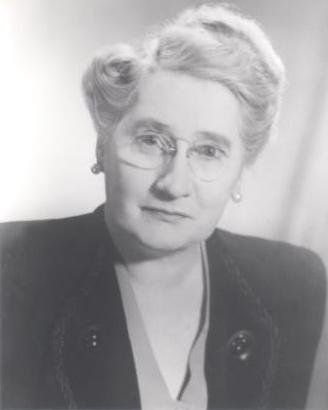
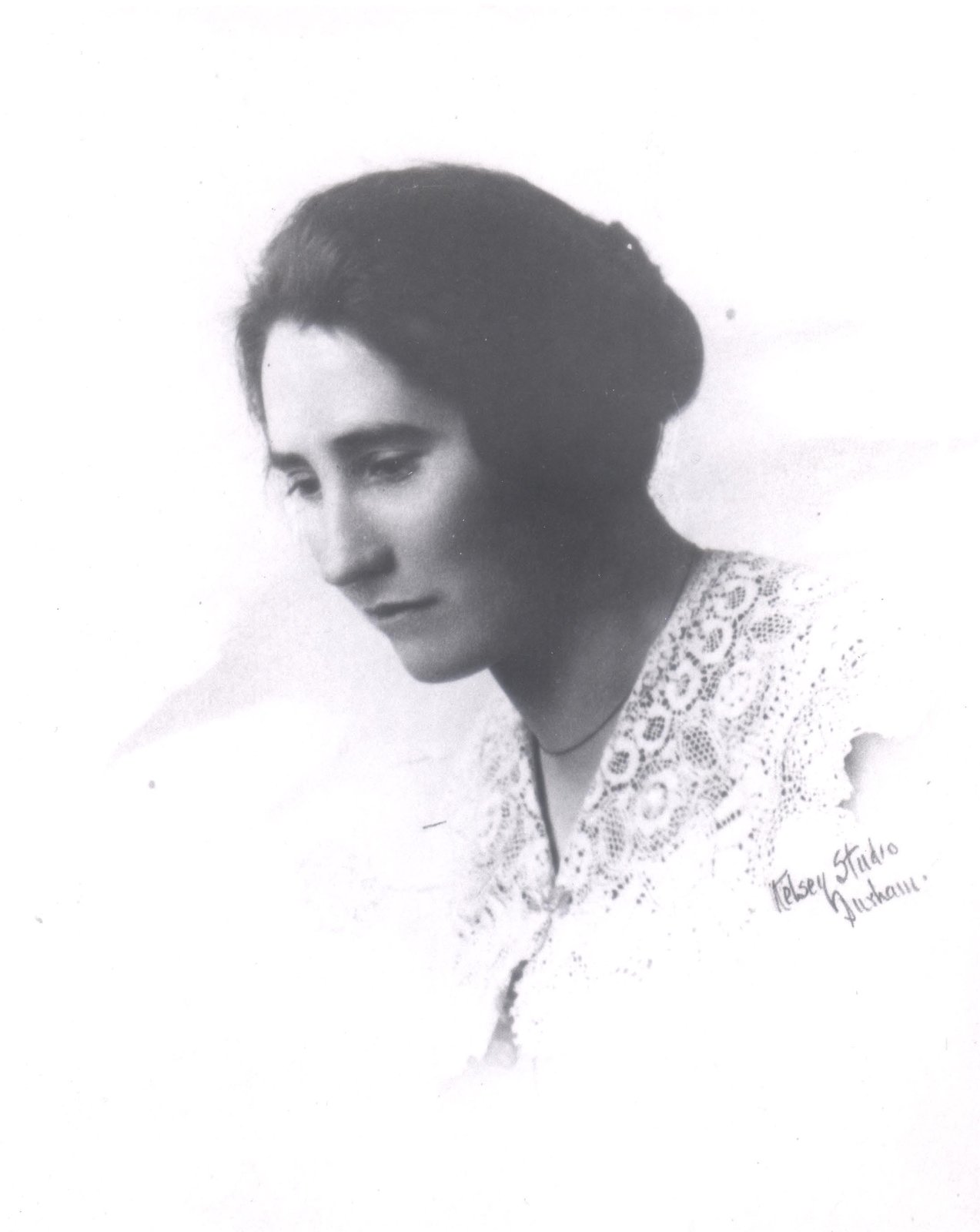
So I am a big fan of all the #deadPMs on Twitter. Recently they’ve been joined by some dead premiers, Fathers of Confederation, etc. and it struck me that the whole thing was becoming quite a sausagefest. Where, I asked myself, is Agnes Macphail, the most bad-ass dead woman MP in Canadian history? (It turns out there is an Agnes Macphail twitter but it’s been inactive for over a year.) So I Wikipedia’ed her, found the links to the Agnes Macphail Digital Collection, and discovered this 1928 speech (pages 1, 2, 3, and 4.
Basically Agnes Macphail is many shades of awesome. I think this quote aptly applies to most Conservative press conferences these days: “However, after reading the speech very carefully I think myself it is an exceedingly clever speech—how adroitly it says nothing at all!”
She also catches the economic signals foreshadowing the Great Depression:
I had the privilege, and I consider it a very great privilege, of visiting last summer very many rural homes in Ontario, Manitoba and Saskatchewan, and I certainly did not find in those homes the prosperity that I read about in the speech from the throne. I found people struggling to meet debt, and worrying over taxes and meeting the payment of their mortgages. I thought the conditions were particularly bad in the province of Manitoba. I believe it was said by some member this afternoon that they no longer grew grain in Manitoba. Well, I think that was true this year.
[…]
I do not consider that we can boast of our prosperity until that prosperity has reached the homes of the mass of the people. I think it is quite likely that the prosperity that has undoubtedly arrived in certain classes and sections of Canada will continue and will likely increase, until possibly it reaches boom dimensions, and will be followed by a crash or a long depression comparable to the one out of which we are just emerging [the depressed conditions following the First World War and into the 1920s].
[…]
One of the things to which I refer is the present Bank act. I notice in the Weekly News of February 3rd, printed in Winnipeg, that the Bank of Nova Scotia made a dividend this year of 16 ½ per cent, which seems a snug little dividend. The Canadian Bank of Commerce made a dividend of 12 per cent, with a bonus of one dollar. It was the same with other banks; evidently they are all making very great profits. Now there is a general feeling in farming districts that our banking system is not all it should be, and that some line of setting up a bank of issue and rediscount should at once be instituted.
Macphail was a pacifist, as you can see in her comments on the munitions industry. She first argues that international trade of arms and munitions should be banned (that would, actually, have saved us from so many problems…) and she’s against the private manufacture of arms:
I see no reason why the manufacture of munitions which are designed to bring about the death of human beings should be in the hands of private individuals who can and who have used this power for private gain. Let us now make a law stating that, if the worst came to the worst at any time in the future and we must face war, all property will be administered by the state; that is, there would be a complete conscription of wealth. I feel this would have a moderating influence upon certain elements in Canada.
Canadian industry had made HUGE money off the First World War (as had America industry) and Macphail may have been correct in fearing that munitions makers were ready to warmonger for their own personal gain. Or maybe she was just pissed at Sam Hughes for giving the munitions contracts to his buddies.
Macphail would have been pro-prison farms if she were alive today. (I also feel like the first prison farms were established around this time with her support, but have found no evidence to prove this.) Her arguments here are very similar to the ones used by protesters of the prison farm closures, except more patronizing:
In our whole system of taking care of prisoners we should look to the good that we can do to the prisoner while he is detained by the state, making him feel that the state is fair to him. That is why I want him to be paid a decent wage for his work, from which wage, of course, his keep must be deducted. We must never forget, too, that the family of the prisoner possibly suffers more than the prisoner himself, and when the prisoner comes out, there should be, shall we say, a fatherly hand of the government to guide that man into civil life, to re-establish him. So many of them when they first get out try for a few days or weeks to go in what we call a straight way, and not being able to do that they very soon revert to crime.
Here’s what she has to say on party politics and majority governments. I have to say I agree with her, more or less, on both fronts:
I am not interested in party politics; I am not interested in parties, although I must say in all fairness that I am very much interested in the people who compose the parties. I am at all times ready, and indeed anxious, to support legislation which to my mind is beneficial to the constituency I have th honour to represent—I believe that is the correct form—and to the country as a whole.
[…]
I do not believe that when you have a stable government—one with a very comfortable majority, you get a good government. I may be wrong; I sometimes am, but I think not in this case, and so, having in power a stable government, one with a very comfortable majority, a majority that unfortunately has been added to by men who should have known better [here she is referring to MPs not voters], I do not see how we can expect a legislative program that will be pleasing to our constituencies. But at least we are here to get for the common people of Canada the best that we can, and I am here sitting ready to be pleasantly surprised by the government.
What a superstar.
We now return to our regularly scheduled programming.
Women, the Vote, and Raising One's Voice
This post originally appeared here:
http://voteagainstapathy.blogspot.com/2011/04/women-vote-and-raising-ones-voice.html
Equal Voice, which is a non-profit organization dedicated to getting more women elected to all levels of government, has a new initiative called the iCommit Campaign, basically asking young women to commit to voting in the election, and staying engaged in politics beyond. If you're a woman between the ages of 18 and 24, you should go do just that.
I've already displayed the graphic that shows voting intentions by age. Here's another one, voting intentions by gender: 
This isn't as drastic as the youth vs. senior because it cuts across all age groups, but there is still an important difference. And if you, like me, are both young and a woman, well, you've probably noticed that the composition of Parliament mostly reflects the votes of older men (who also make up most of the composition of Parliament). That's why it's important, not only to vote, but to be politically engaged. We do need more women in Parliament. We don't have nearly enough women running for election let alone winning. As Jack Layton points out, it's a historic first that even 40% of NDP candidates in this election are women.
All this has made me reflect on the history of women's votes. Well, no, actually that's a lie. I was already reflecting on the history of women's votes because I wrote a paper about it two weeks ago so it's all fresh in my mind. (I'm a nerd, so sue me.)
You may not know this, but up until the 1840s it was common practice for women in Montreal to vote. When we think about the history of women voting, we usually think of the suffragettes. But I kind of like these earlier women who weren't necessarily fighting for anything, who just went out and voted like it was no big deal.
The thing you have to understand is that before democracy became the big new thing in the late 1700s/early 1800s, position in the social hierarchy was a much better indicator of your power than gender. Anyone who's seen The Tudors or Marie Antoinette will know that women in court had a lot of power. And poor women were just as likely to riot in the streets as their male counterparts.
In order to be eligible to vote in most parts of the British Empire, you had to be a subject of the King/Queen, over the age of majority, and hold a certain amount of property in your name (this was to keep the voting to the more prosperous members of society, rather than the rabblerousers on the street). Traditionally, property was held by men, who passed it down to their oldest son. In the absence of sons, a daughter might inherit some property in the richest of families (think Anne de Bourgh in Pride and Prejudice), but not in families that were less well-off (think Mr. Collins and the Bennett sisters). Whoever did inherit would be expected to care for the widow (think Mrs. Dashwood from Sense and Sensibility). So women rarely held enough property to be eligible to vote, although they were not banned from doing so should they meet the requirements.
Quebec, however, maintained French Civil Law even under the British Empire. Under Quebec laws, property was jointly held by married couples, although the husband, as executor, was essentially considered to own the property. However, this meant that upon a man's death half of the marital property belonged to the widow, and the other half was generally split among all children who were of age. This meant that many widows of voters, especially those whose children were under the age of majority, were eligible to vote. It also meant that more daughters inherited property. And the "separation of goods"--a marital contract that stopped property from being held jointly by keeping it in the name of the person who brought it into the marriage--was common for upper middle class families like the Molsons (beer) and the Redpaths (sugar).
So in many parts of Quebec, and particularly Montreal, women were in the habit of voting. This was sometimes controversial, since polls were much more violent places in the early nineteenth century than they are now. And some people were afraid that married women who voted were being dragged to the polls by their husbands in order to provide an extra vote for the husband's chosen candidate. But all in all, women voters were accepted, especially the widows.
And then equality happened. The thing with equality is that it was all men who were born equal, not all people. It was liberté, égalité, fraternité. Women were kind of squeezed out of the political arena, firstly because most women who had power were aristocrats, and also because women were associated more and more with the private sphere: motherhood, domesticity, and being a good little wife. (Think the Victorian era, or maybe the 1950s.)
All of a sudden the idea of a poor little wife and mother being pushed onto the hustings and forced to say, "My name is x, I am a loyal subject of Queen Victoria, I have property worth x amount on x street, and I would like to vote for candidate x," in front of a jeering crowd of thugs, was unthinkable. (Yes, this was how people voted back in the day). Any woman who would do that willingly was clearly of questionable morality, and DUDE GUYS WE NEED TO SAVE THE WIMMENZ WHO ARE BEING FORCED TO PARTICIPATE IN DEMOCRACY!!!!! There was also a thing where they were afraid that if women could vote, women would try to run for seats, and then they would be pregnant all the time and never able to show up to Parliament, but that's just so ridiculous I'm not even going to try to unpack it.
In the Election Act passed in the Province of Canada (ie Ontario and Quebec) in 1849, buried in 30 pages of minutiae on determining county boundary lines and the legitimacy of returning officers, is this line:

Article 46: "And be it declared and enacted, That no woman is or shall be entitled to vote at any such election, whether for any County or Riding, City or Town."
Just one sentence! Just one sentence that in a stroke strips thousands of people of their voting privileges!
And it was such a non-issue that I haven't even been able to find a reference to it in any of the newspapers of the time.
So that's why I think it's important for women to vote. Because our government and our parliament were built in a time when people had that mindset. Most of the Fathers of Confederation were already in politics by the time that bill went through. Sir John A. Macdonald voted on it, probably without thinking about Article 46 because I'm pretty sure that's the shortest article in the entire Act. The only reason women got to vote again in the first place was a political ploy by Sir Robert Borden during the First World War, when he allowed the wives and mothers of soldiers to vote, knowing they would most likely vote for him and keep him in power.
Don't you think we should be reasserting our rights, reinserting our voices? I understand that a system created when the idea of women voting was counterintuitive, doesn't really speak to women. But that's exactly WHY we need to speak up for ourselves, why we need to get in there and MAKE things more accessible for women.
Because the old men that run our country right now? They sure ain't gonna do it.
Subscribe to:
Posts (Atom)