About Me

Canada
youngadult~student~Canadian~female~bilingual~ethnic~totallyawesome

Friday, May 6, 2011

Canada's First Woman MP is my Idol

This post originally appeared here:

http://voteagainstapathy.blogspot.com/2011/04/canadas-first-woman-mp-is-my-idol.html

We now pause our regularly scheduled election coverage for a brief homage to this woman:


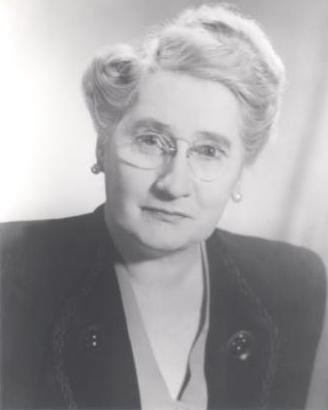
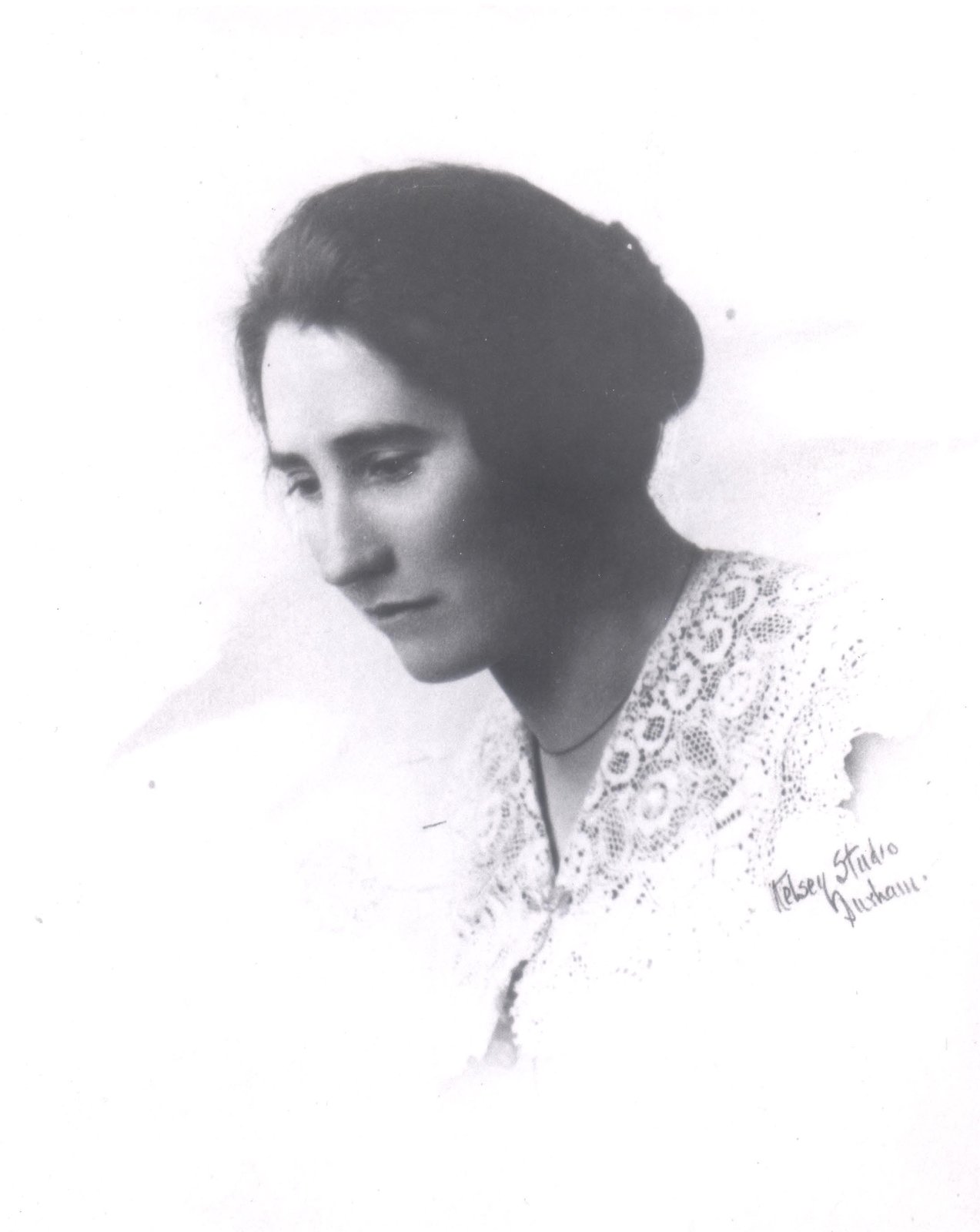
So I am a big fan of all the #deadPMs on Twitter. Recently they’ve been joined by some dead premiers, Fathers of Confederation, etc. and it struck me that the whole thing was becoming quite a sausagefest. Where, I asked myself, is Agnes Macphail, the most bad-ass dead woman MP in Canadian history? (It turns out there is an Agnes Macphail twitter but it’s been inactive for over a year.) So I Wikipedia’ed her, found the links to the Agnes Macphail Digital Collection, and discovered this 1928 speech (pages 1, 2, 3, and 4.

Basically Agnes Macphail is many shades of awesome. I think this quote aptly applies to most Conservative press conferences these days: “However, after reading the speech very carefully I think myself it is an exceedingly clever speech—how adroitly it says nothing at all!”

She also catches the economic signals foreshadowing the Great Depression:

I had the privilege, and I consider it a very great privilege, of visiting last summer very many rural homes in Ontario, Manitoba and Saskatchewan, and I certainly did not find in those homes the prosperity that I read about in the speech from the throne. I found people struggling to meet debt, and worrying over taxes and meeting the payment of their mortgages. I thought the conditions were particularly bad in the province of Manitoba. I believe it was said by some member this afternoon that they no longer grew grain in Manitoba. Well, I think that was true this year.
[…]
I do not consider that we can boast of our prosperity until that prosperity has reached the homes of the mass of the people. I think it is quite likely that the prosperity that has undoubtedly arrived in certain classes and sections of Canada will continue and will likely increase, until possibly it reaches boom dimensions, and will be followed by a crash or a long depression comparable to the one out of which we are just emerging [the depressed conditions following the First World War and into the 1920s].
[…]
One of the things to which I refer is the present Bank act. I notice in the Weekly News of February 3rd, printed in Winnipeg, that the Bank of Nova Scotia made a dividend this year of 16 ½ per cent, which seems a snug little dividend. The Canadian Bank of Commerce made a dividend of 12 per cent, with a bonus of one dollar. It was the same with other banks; evidently they are all making very great profits. Now there is a general feeling in farming districts that our banking system is not all it should be, and that some line of setting up a bank of issue and rediscount should at once be instituted.


Macphail was a pacifist, as you can see in her comments on the munitions industry. She first argues that international trade of arms and munitions should be banned (that would, actually, have saved us from so many problems…) and she’s against the private manufacture of arms:

I see no reason why the manufacture of munitions which are designed to bring about the death of human beings should be in the hands of private individuals who can and who have used this power for private gain. Let us now make a law stating that, if the worst came to the worst at any time in the future and we must face war, all property will be administered by the state; that is, there would be a complete conscription of wealth. I feel this would have a moderating influence upon certain elements in Canada.


Canadian industry had made HUGE money off the First World War (as had America industry) and Macphail may have been correct in fearing that munitions makers were ready to warmonger for their own personal gain. Or maybe she was just pissed at Sam Hughes for giving the munitions contracts to his buddies.

Macphail would have been pro-prison farms if she were alive today. (I also feel like the first prison farms were established around this time with her support, but have found no evidence to prove this.) Her arguments here are very similar to the ones used by protesters of the prison farm closures, except more patronizing:

In our whole system of taking care of prisoners we should look to the good that we can do to the prisoner while he is detained by the state, making him feel that the state is fair to him. That is why I want him to be paid a decent wage for his work, from which wage, of course, his keep must be deducted. We must never forget, too, that the family of the prisoner possibly suffers more than the prisoner himself, and when the prisoner comes out, there should be, shall we say, a fatherly hand of the government to guide that man into civil life, to re-establish him. So many of them when they first get out try for a few days or weeks to go in what we call a straight way, and not being able to do that they very soon revert to crime.


Here’s what she has to say on party politics and majority governments. I have to say I agree with her, more or less, on both fronts:

I am not interested in party politics; I am not interested in parties, although I must say in all fairness that I am very much interested in the people who compose the parties. I am at all times ready, and indeed anxious, to support legislation which to my mind is beneficial to the constituency I have th honour to represent—I believe that is the correct form—and to the country as a whole.
[…]
I do not believe that when you have a stable government—one with a very comfortable majority, you get a good government. I may be wrong; I sometimes am, but I think not in this case, and so, having in power a stable government, one with a very comfortable majority, a majority that unfortunately has been added to by men who should have known better [here she is referring to MPs not voters], I do not see how we can expect a legislative program that will be pleasing to our constituencies. But at least we are here to get for the common people of Canada the best that we can, and I am here sitting ready to be pleasantly surprised by the government.


What a superstar.

We now return to our regularly scheduled programming.

Mob Mentality

This post originally appeared here:

http://voteagainstapathy.blogspot.com/2011/04/mob-mentality.html


Yesterday, I read this and it made me really angry. It's an opinion piece by Michael Taube, a former Harper speechwriter, about why vote mobs are a terrible, horrible, very bad idea. I already knew I was going to be unimpressed by the second paragraph: "A few weeks ago, there was no such thing as a “vote mob.” But an idea hiding in a deep, dark corridor of comedian Rick Mercer’s brain has, quite by accident, unleashed this holy terror onto unsuspecting Canadians." Holy terror? Srsly? Don't you think that's a bit overdramatic? Taube also says, "Thanks a bunch, Rick. Just what Canada always wanted: another excuse for young people to do foolish things in public, complete with a mob mentality. I’ll make sure you get an extra lump of coal in your stocking at Christmas for your good deed!"

Excuse me, sir. I did not realize that making a public demonstration of our intentions to perform our civic duty and vote counted as "doing foolish things in public." Please allow me to grovel at your feet in forgiveness.

Taube argues, first of all, that vote mobs aren't going to encourage anyone to vote who wasn't going to do so already. This is a common criticism of vote mobs, and my opinion on this subject is down later after I've finished ranting. Anyway, back to Taube:

Also, vote mobs aren’t going to force major changes in the political parties to recognize youth issues. Do you really think any of the major leaders honestly cares that some 18-25 year-olds who wouldn’t ordinarily vote have suddenly been convinced by a comedian’s rant on TV? I hate to break it to them, but there are already young people in all political parties who have been volunteering in campaign offices for weeks. They do everything from answering phones to helping shape policy. These are the type of young voters that the parties want to attract, not those of the circus clown variety.

At the same time, is it a wise idea to encourage young people to vote who aren’t well informed on politics and current events to begin with? For instance, there is a political radicalism among youth — especially the type of youth who would stay home on election day — that could lead to many fringe parties receiving votes. This is good for democracy, but not necessarily for political stability. While no one is expecting all young people to have PhD-level understanding of the Canadian political system, a decent amount of knowledge would be nice.


You think that just because we dance around in bright colours to demonstrate our enthusiasm, we are "circus clown" voters instead of "serious" voters? I don't think this even dignifies a response. Also: have you ever tried to control a crowd of 300 screaming young adults, or an elephant? Requires skills I imagine you don't possess. Have some respect for the circus, please.

And then--"...encourage young people to vote who aren't well informed on politics and current events to begin with." Well colour me infuriated. Do you think that all "non-young" adults who vote are informed about the issues? Today when I was standing in line at the advance poll, I heard a middle-aged man say that the results would probably be the same as last time, because nothing had happened to change people's opinions. WHAT. I wanted to turn around and tell him everything I've posted on this blog in the past month, and more. An even bigger problem is people (particularly elderly people) who vote out of tradition. Two close friends of mine say their grandmothers do this--the one votes Conservative every election because her father always voted Conservative, the other considers herself to come from a strong Grit family and so votes Liberal in every election out of family tradition. (Both of these women live in rural areas where memories are long and traditions strong.) Being informed about the issues has never been a requirement for voting for any segment of the population--and I think that young people are more likely to NOT vote if they feel uninformed.

Don't even get me started on "there is a political radicalism among youth — especially the type of youth who would stay home on election day." I feel like he's probably imagining a person who votes for the Marijuana Party but accidentally gets high on election day and forgets to go to the polls. Or something. Because all of the young people I know who are politically radical are making a point of returning a ballot this election--even if it's a blank one.

And you know what? I would like to see a decent amount of knowledge about the political system from our leaders, thank you. A lot of the most politically active students are studying politics or related fields, and know WAY MORE SHIT about parliamentary democracies than the general population.

I'm sure that Mr. Taube also imagines that young people don't read newspapers, or perhaps he wouldn't have submitted something so negative against young people to be published.

Anyway. Happier news. The CBC interviewed some vote mob participants in Toronto. It's pretty interesting.

The other day I participated in a vote mob myself, and I wanted to share some of my thoughts on the experience. While it was happening--the running, the screaming, the cheering, the chanting, the waving of signs, the dancing, the singing--I felt invigorated, enthused, inspired. The only problem was that, unlike your average rally, this was explicitly being filmed for YouTube, and so the camera operators needed to get a lot of shots of us to edit together later. We would run around the intersection, dance for about a minute, cheer, dance a bit more, and then run around the intersection again... rinse & repeat... that really got in the way of the momentum and just became exhausting.

After I got home, I thought about it. I thought about the students who streamed out of exam halls as we started our mob, and who we were supposed to be trying to engage. I thought about their faces... confused, amused, or indifferent. Groups of people in colourful outfits running around, cheering, and waving signs are actually a fairly common sight on my campus. (Another reason why I took offense to Taube's "circus clown" comment...) And I thought about the twenty minutes we spent standing around before the vote mob started, waiting for exams to let out so we could make noise. A couple of girls walking by on the sidewalk knew one of the participants who was standing near me, and they came up to ask her what was going on. She explained about the vote mob movement, about low youth voter turnout, about the importance of voting. The two girls looked interested. "That's really cool," one said. "I thought you guys were like rallying for the Young Liberals with all that red." "No! No! The red is for Canada!" "Ooooooohhhhhh..."

While those two girls walked away from us more informed and interested than they had been, I didn't see any of the students coming out of the exam halls join in our dancing/running/chanting/sign-waving. I realized that our brightly-coloured mob looked closed to them--no, not even that. The mob of people had become one amorphous blob of humanity, dancing-running-chanting-singing-running-dancing-chanting, alienating rather than welcoming.

That led me to two important thoughts. First, the potential for vote mobs to attract new voters lies more in the social media aspect--having an awesome YouTube video that makes its way around Facebook and Twitter--than in the actual vote mob itself. Second, vote mobs are important NOT just to encourage students to vote--the biggest criticism of vote mobbing. Of course they're almost entirely made up of people who were always going to vote anyway. That's not a problem. Vote mobs are the highly visible physical manifestation of some young people's political engagement. Because almost 40% of young people voted in the last election, and while that is a very small voter turnout, we focus so much on the almost two-thirds of youth who didn't vote that I think a lot of people often forget about the over one-third of youth who did. Showing up for a vote mob is kind of like putting on a "This is what a feminist looks like" t-shirt. Maybe we're less than half of youth, but we're here, we pay attention to the issues, we're voting, and you can't ignore us if we wear bright colours and scream really loudly (although you can call us circus clowns).

At the end of the day, a sign I saw at the vote mob expresses in itself why the vote mob phenomenon, why the visibility of youth voters, is so important: "We're not just the future. We're the present, too."

This is How a Parliamentary Democracy Works

This post originally appeared here:

http://voteagainstapathy.blogspot.com/2011/04/this-is-how-parliamentary-democracy.html


The CBC have an article called "Ignatieff, Harper in war of words over minority scenarios". They've got that right.

So, here's the 411, to use Layton-esque slang. Yesterday, Michael Ignatieff said that if the Conservatives win a minority, but are unable to secure the confidence of the House, and the governor general asks the Liberals if they can form the government, he will try to do so.

He acknowledged that he could try to form a government — without going back to Canadian voters — if a Conservative minority is elected but subsequently defeated in the House of Commons. Moreover, Ignatieff made no apologies for that possibility — saying that this is exactly what would normally happen in a parliamentary democracy.

Ignatieff's comments set up a clear contrast with views held by Conservative leader Stephen Harper over the legitimacy of a government led by a second-place party and promise to be pivotal issues in the remaining days of the campaign.


He's absolutely right. This is exactly what would normally happen in a parliamentary democracy. It's called the Westminster system. In the Westminster system, electors choose the MPs that make up the House of Commons, and whichever party has the support of the House gets to form government whether it has the most seats or not. Usually the party that has the most seats gets to try first, but if things change, that party loses confidence but another party gains it, then that second party can form the government. Here's the hypothetical situation in question, according to Ignatieff:

"If Mr. Harper wins most seats, forms a government but does not secure the confidence of the House — and I'm assuming Parliament comes back — then it goes to the Governor General. That's what happens. That's how the rules work.

"And then, if the Governor General wants to call on other parties — myself for example — to try to form a government, then we try to form a government. That's exactly how the rules work. And what I'm trying to say to Canadians is, I understand the rules, I respect the rules, I'll follow them to the letter and I'm not going to form a coalition."


Seriously. Trust Ignatieff on this. He's right. That's what happens, that's how the rules work. I mean before he was a politician he used to study and teach this stuff for a living at some of the greatest universities in the world!

Stephen Harper sees things another way. He's already mentioned he thinks it's "undemocratic" that the second-place party rule. He also believes that Ignatieff is secretly talking about a coalition:

The Conservative leader said Wednesday he would be “honoured with any mandate” his party receives from voters on May 2.

But refused to discuss what changes to the party’s platform he would be willing to accept to keep the Conservatives in power if they win another minority.

Instead, Harper ratcheted up his rhetoric about the prospect of a coalition, calling it a ‘black hole” that would stall the recovery, provoke more constitutional squabbling, and trigger a “national-unity crisis.” He was likely referring to comments by Jack Layton in the English-language debate, in which the NDP leader said he was open to re-opening the debate on how to get Quebec to sign the constitution.

Harper also declared that an opposition coalition would lead to another referendum on whether Quebec should separate from Canada, even though it would be up to the provincial government to put forward such a vote.

“We don’t know what that government will stand for,” Harper said of a possible coalition.

“But we do know the general outlines. There’s no focus on the economy. There are tax hikes, and of course these parties have very dangerous and conflicting views on national unity and constitutional matters. So as I say, I think the option for Canadians to avoid all of this, is to vote for a strong, stable, national majority conservative government on May the second.”


Okay. First of all, it is FAR FROM a clear choice between a Strong Harper Majority and an Evil Reckless Coalition. Firstly, majorities tend to be more reckless than coalitions, who must remain moderate in order to appease all parties involved. Secondly, Ignatieff has said time and time again that he WILL NOT form a coalition, and in the hypothetical situation he has outlined he's not forming a coalition either. Thirdly, if there is a Conservative minority, what makes a minority stable is having the support of the House. If Harper refuses to co-operate with other parties, any minority he had would be lost very quickly. And I'm not even going to get into the allegations that a Liberal government will mean another sovereignty referendum in Quebec.

But back to the CBC article, where the leaders are bickering and trying to clarify their statements.

"I have never said I will vote against his budget," Ignatieff told reporters in Saint John.

Harper would have to negotiate support with the other parties and govern accordingly, he added.

"What I've said is, I want to form a government. I want to get … the most seats. I then want to offer a budget to the Parliament of Canada and seek its support. If he gets more seats than me or my party, then he will present a budget, and hey, you know what I do with a budget: I read it."


Harper says he wants to form a majority government. Ignatieff says he would be happy to form any government at all. Clearly this makes Ignatieff a volatile vigilante bandito. Even worse, the leader of a gang of volatile, vigilante, separatist, socialist banditos! But Ignatieff responds to Harper's comments about the coalition:

"No. I repeat, no," Ignatieff said to applause from Liberal supporters.

"I don't have a problem about coalition, and I don't have a problem about respecting the constitution of my country. With the greatest respect, I would tell you that Mr. Harper has a problem with both."

Later, Ignatieff said of Harper: "What does he think he is? The king here? It's 'my way or the highway' the whole time .… He has an obligation to present a budget that has the confidence of the House of Commons .… The ruthless, relentless disrespect for Parliament is why we're having an election here."


And Gilles Duceppe weighs in on the issue with clear insight, reminding me that during the leaders' debates some people commented that he has the best understanding of how our government works:

Bloc Québécois Leader Gilles Duceppe was critical Wednesday of what he called Harper's "no compromise" approach to dealing with the possibility of another minority government, calling it irresponsible.

Speaking with reporters in the Eastern Townships, Duceppe said Harper "needs to respect those whom Canadians choose to send to Ottawa to represent them."


Because, see, THIS is how the Westminster system works, THIS is how a parliamentary democracy works, THIS IS HOW OUR GOVERNMENT WORKS. We, Canadians, choose our MPs, based on the interests they're trying to protect. Then the MPs go to Parliament and duke it out there over who gets to form the government, based on who has interests in common. Your MP will presumably vote to protect the same interests WHETHER OR NOT their party is government. In the case of a minority government, it doesn't have that much more power than the other parties in terms of creating legislation, except it makes the budget. Whether a minority government is formed by the largest or the second-largest party doesn't really make a difference, because either way they have to work and compromise with other parties in order to pass their budgets and their bills. So, as Duceppe pointed out, Harper's refusal to work with the MPs the majority of Canada chose, in the case that he has a minority government, is incredibly irresponsible and WILL result in him losing confidence of the House.

This seriously feels like the King-Byng affair all over again. In that case, Mackenzie King's Liberals, who finished second to Arthur Meighen's Conservatives, formed the government with the support of the Progressives. The next year, when King's government was under threat due to a scandal caused by one of his ministers, King asked Lord Byng, the governor general, to dissolve parliament and call an election, but Byng refused. Since Meighen actually had more seats than King, Lord Byng wanted to give him a chance to form government before calling an election. Meighen was prime minister for only a couple of months before his government lost the confidence of the House. Then there was an election and King won a majority.

Moral of the story? Sometimes the second-place party makes a better government.

Also, I kind of want to be governor general. But that's another story.